
For this third blog post, I’ve decided to talk about the apparent animosity between the French and Italian musical styles during the Baroque, providing a commentary and reflection on some of the readings we have been given, including articles by François Raguenet (from 1702) and Jean-Laurent Lecerf de la Viéville (from 1704) in Enrico Fubini’s Music & culture in eigteenth-century Europe: a source book (1994), which argue for or against French music vs. Italian music. Unfortunately I can’t provide you with a copy, otherwise I’ll probably be sued/fined for copyright infringement, but hopefully you can still appreciate some of the humour, even second-hand.
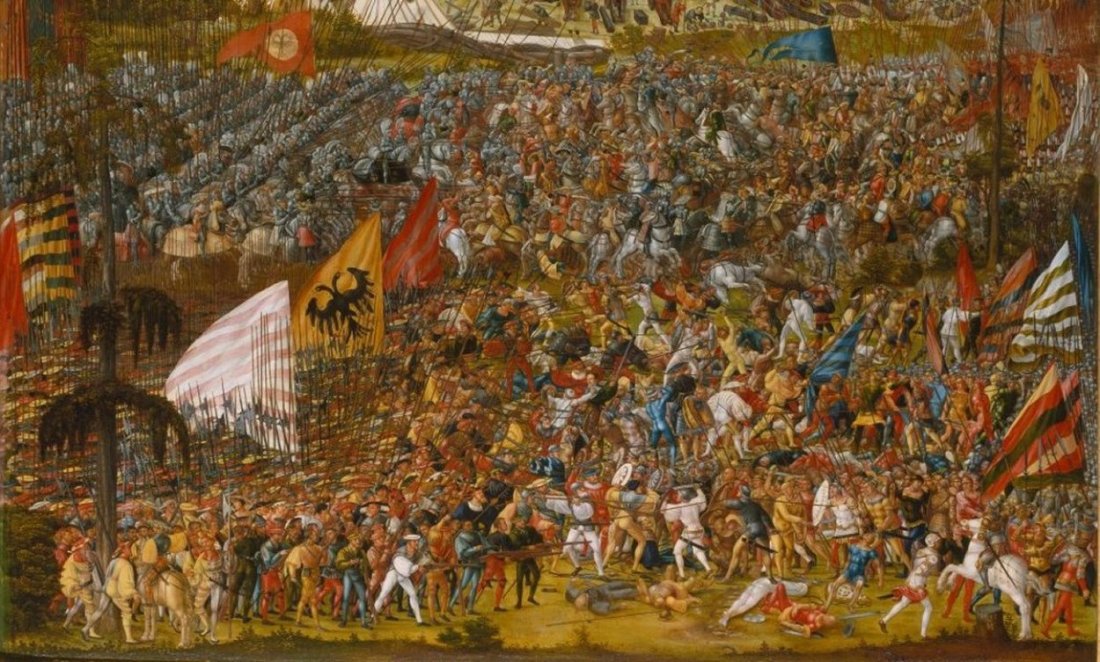
France’s antagonism towards “alien” groups during this period really starts during the Thirty Years War (1618-48), one of the bloodiest religious wars in Europe’s history. Although the largest neutral Catholic power, France under Louis XIII nonetheless started a process of centralization under an absolute monarchy (whose power in the autonomous/pretty-much-independant provinces had been historically very weak), the Protestant Huguenot population serving as a handy scapegoat.
During Louis XIV’s reign, Italy seems to have served a similar, if much less violent role as scapegoat. Under the artistic patronage of the King, professionalisation in particular areas was encouraged to start a trend in national style that differed from those styles found in other parts of Europe, especially those in the Italian states, the purported cultural capital of Europe. This was again a way to try to centralize the arts under the monarchy, creating a unified national style that would simultaneously strengthen the state’s image and weaken the provinces’ individual identities.
Both Raguenet’s and de la Viéville’s articles are quite amusing. Ragunet, fighting for the cause of the Italian style, relies on measured argument and an endearingly contemptuous view of the French style, which he degrades as safe, comfortable and cautious, extolling the bravery and adventurousness of the Italians, pointedly recalling that Lully, the darling of the French music scene, was himself Italian. De la Viéville on the other hand relays his argument wittily, writing in the style of a conversation between a set of friends (the Chevalier [presumably himself], the Countess and the Count), routinely quoting and deriding musicological rivals, as well as using food analogies on almost every page to enforce his argument! Both use the point that Italian music is daring, adventurous, and much more willingly dissonant, while French music is “natural” (de la Viéville uses the “If God had given us wings…” argument at one point), with carefully considered use of chords and dissonance in very few places. Ragunet claims that the Italians have much more talent for creating beautiful, evenly expressed four-part works, whilst the French are happy to get the top and bass lines right. Both also use the argument of inherent national or racial differences in temperament; this sort of argument always makes me slightly uncomfortable, but I can see that this sort of view would be widely encouraged by an absolute state, especially one pursuing an isolationist policy. I can’t help wondering what Monsieur’s de la Viéville and Ragunet would make of a bit of Bartók or Liszt, or how de la Viéville’s “too-spicy Italian stew” analogies would fare or change with the introduction of exotic spices from the Indies that would arrive in large volumes within the century.
 Une forme supérieure de Musique (interesting music)